Observing bird migration during evening hours presents different constraints from daytime fieldwork. Light levels fall progressively through the session, distance estimation becomes less reliable, and species identification shifts toward jizz, call, and flight silhouette rather than plumage detail. The equipment choices and positioning strategies described here address those constraints specifically in the context of Polish habitats and the species moving through them during the dusk window.
Optics for Low-Light Conditions
Standard binoculars with 8×42 or 10×42 specifications perform adequately during the first half of the dusk window, when light is simply reduced rather than absent. The 42mm objective diameter provides a useful exit pupil in bright conditions and gathers sufficient light for most identification tasks until roughly 30 minutes after sunset.
Beyond that point, the limiting factor shifts from magnification to light transmission. Binoculars with larger objective lenses — 50mm or 56mm — extend the usable period by perhaps 10–15 minutes. More significant in practice is the quality of optical coatings. Phase-corrected roof prisms with fully multi-coated optics show noticeably better contrast and definition in twilight than entry-level glass of equivalent magnification.
Compact thermal monoculars have become accessible enough that some dedicated counters use them during post-sunset sessions to detect bird shapes against the sky. These devices detect heat signatures rather than reflected light, so they remain functional after optical observation becomes impossible. They do not allow species identification at the level that conventional optics do, but they extend the detection window for counting purposes. They are not required for standard dusk observation and are mentioned here for completeness.
Telescope and Tripod Use at Dusk
A spotting scope on a fluid-head tripod adds capability during the middle portion of the dusk window when birds are roosting or moving at distances beyond the range of binoculars. For counting crane or goose flocks settling into roost across a wide river valley or wetland, a scope with a 20–60× zoom allows direct counting of distant aggregations before darkness obscures detail.
Tripod stability matters more at low light because hand tremor is amplified relative to the reduced available light. A carbon fibre tripod minimises setup time and reduces fatigue during extended sessions. Positioning the scope west of the observation point allows observers to count birds moving against the lighter western sky for the longest possible period after sunset.
Site Positioning
The most productive evening observation positions share several characteristics. An open horizon to the west and northwest allows birds to be silhouetted against the fading sky for the maximum duration. Elevated positions — dyke crests, low hills, elevated banks — increase the detection range for birds in active directed flight. However, these advantages diminish as light fails; at civil twilight, the practical detection range drops from several kilometres to a few hundred metres regardless of elevation.
In the Polish context, the most consistently productive position types include:
- Dyke crests along the middle Vistula between Puławy and Płock — open views across the active channel with clear western sky exposure
- Reservoir embankments at sites like the Zegrzyński Reservoir north of Warsaw — good for duck and gull movement, and occasional raptor counts
- Wetland margins at Biebrza — dawn and dusk movement of waders, harriers, and crakes is concentrated at wet grassland edges
- Forest edges adjoining open agricultural land — useful for raptor pre-roost movements and passerine migration watches
Recording Equipment and Methods
Paper datasheets remain the most reliable recording tool at dusk because screens attract insects at certain times of year, reduce night adaptation, and can fail in cold or wet conditions. A pre-prepared grid with species rows and five-minute time columns allows efficient tally recording without requiring legibility under poor light. A head torch with a red-light mode preserves night vision when checking notes.
Audio recording is particularly valuable during the dusk window because call detection extends well after visual detection fails. A handheld digital recorder with a built-in directional microphone, pointed toward the sky in the direction of main flight, captures contact calls of nocturnal migrants — thrushes, redwings, and various wader species — that can be identified later using published call libraries such as those available through xeno-canto.org.

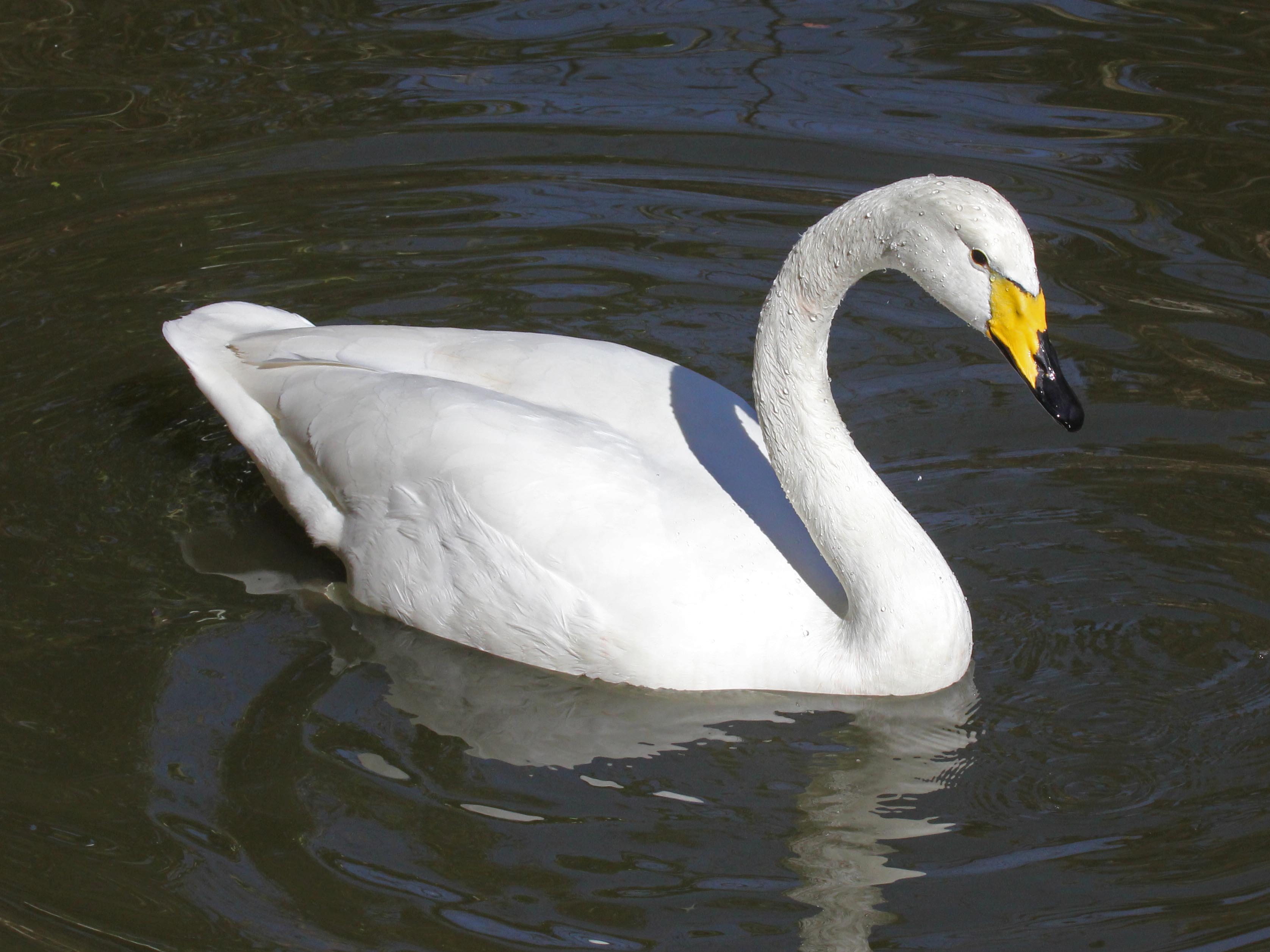
Whooper swans at a staging site. Wikimedia Commons / CC BY-SA 2.0
Timing the Session
Civil twilight — defined as the period when the sun's centre is between 0° and 6° below the horizon — varies by latitude and season. At 52°N (approximately Warsaw's latitude), civil twilight in October lasts roughly 35 minutes after sunset. The productive observation window extends from approximately 90 minutes before sunset to the end of civil twilight, giving a total session of around two hours.
Arriving at the site before the productive window opens allows time to assess wind direction and adjust positioning, to scan for birds already settled in the area, and to ensure recording equipment is functioning. Departing at the end of civil twilight is a practical constraint in most cases, though observers using audio recording can continue collecting data without visual confirmation.
Safety and Access Considerations
Dusk fieldwork in rural Poland involves returning to vehicles or public transport in darkness. A fully charged mobile phone, a physical backup torch, and pre-downloaded offline maps of the area are standard precautions. Many of the most productive sites — river dykes, wetland access tracks — are remote enough that mobile coverage is unreliable.
Access permissions for dyke crests and managed wetlands in Poland vary. The national parks (Biebrza, Ujście Warty) have defined visitor rules and permit requirements for access outside standard hours. Regional nature reserves operated by the Regional Directorate of Environmental Protection (RDOŚ) may require notification for scientific monitoring activities, even where no formal permit is needed for casual visits.